


Donate Today | Receive Email Updates | Search

The HPV Connection


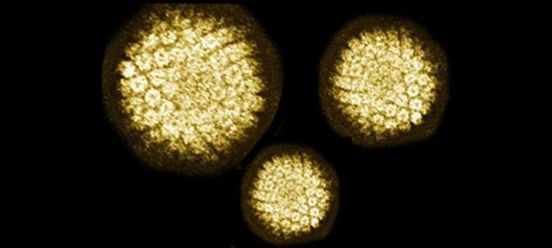
A scanning electron microscope image of one human papilloma virus One of the most common virus groups in the world today affecting the skin and mucosal areas of the body, is the human papilloma virus. Over 120 different types/versions of HPV have been identified, and different types are known to infect different parts of the body. The most visible forms of the virus produce warts (papilloma's) on the hands, arms, legs, and other areas of the skin. Most HPV's of this type are very common, harmless, non cancerous, and easily treatable. Genital warts are known technically as condylomata acuminatum and are generally associated with two HPV types, numbers 6 and 11.

HPV transmission can be quite simple with just skin to skin contact transferring the virus. There are other forms of HPV which are sexually transmitted, and some of these are a serious problem. The most common of these are; HPV-16, HPV-18, HPV-31, and HPV-45. These cancer-associated types of HPV's cause growths that usually appear flat and are nearly invisible, as compared with the warts caused by HPV-6 and HPV-11. (A scanning electron microscope image of one human papilloma virus appears at the top of this page.) Two types of genital tract HPV in particular, HPV 16 and HPV 18, are known to cause the vast majority of cervical cancers, and new studies show that one of them, HPV16, is also linked to oral cancer as well. In the oral environment HPV16 manifests itself primarily in the back (posterior) regions such as the base of the tongue, the oropharynx (the back of the throat in the mouth), the tonsils and the tonsillar pillars. These oncogenic or cancer causing versions of HPV are also responsible for other squamous cell carcinomas, particularly of the anus and penis.

It has now been established that the path that brings people to oral cancer contains at least two distinct etiologies; one through tobacco and alcohol, and another via the HPV virus, particularly version 16, though other versions of the virus might be implicated as the research unravels further. The anatomical malignancy sites associated with each pathway appear to also be different from each other. In the broadest terms they can be differentiated into these areas; HPV related appear to occur on the tonsillar area, the base of the tongue and the oropharynx, and non-HPV positive tumors tend to involve the anterior tongue, floor of the mouth, the mucosa that covers the inside of the cheeks and alveolar ridges (the ridge area in which the teeth reside).  The data on these two distinct etiologies is coming out of researchers more rapidly now, and there are further definitions that seem to be apparent between the two. While these issues are discussed more fully in the PDF readable research articles included in this portion of the web site, in general it appears that HPV positive tumors occur most frequently in a younger group of individuals than tobacco related malignancies. (Tobacco oral cancers occur most frequently in the 5th through the 7th decade of life.) They also occur more in white males, and in non smokers. The HPV positive group is the fastest growing segment of the oral cancer population.

HPV & Oral Cancer

General information about viruses

Misunderstanding commonly results when people group viruses and bacteria into the same category of disease. Bacteria and viruses are two completely different organisms, each functioning in different and unique ways. Bacteria are one-celled organisms capable of living and reproducing independently. The major parts of a bacterium cell are; a cell wall, cytoplasm, and a nucleoid. The cell wall protects the cell and gives it shape. The cytoplasm is the fluid inside the cell where cell growth, replication, and metabolism are carried out. The cytoplasm also contains all the components for these actions such as the nucleoid, ribosomes, and plasmids. The nucleoid is the region in the cytoplasm where the strands of DNA are located. Bacteria cells reproduce through a process called binary fission. In this process, a single bacterium cell grows to twice its normal size and splits into two daughter cells. These two new daughter cells are exact copies of the original cell. When bacteria infect a body, they do so by multiplying inside the organism and producing toxins that infect surrounding cells or tissues. But very few bacteria are harmful. 99% of the bacteria found in the body are helpful, and most are actually necessary for life. Harmful disease-causing bacteria can be eliminated or killed with antibiotics.

Viruses on the other hand, exist and function in an entirely different manner than bacteria. They are not an independent organism. When a virus is alone it is not metabolically active like bacteria; it needs a host cell to function, and in which to reproduce. A virus is composed of only a protein capsule that encloses its DNA or RNA. When a virus comes in contact with a cell, it is capable of inserting its genetic material into that host cell. Once the virus has invaded a host cell, it can go into two phases: lysogenic or lytic. During the lysogenic phase, the virus remains dormant in the cell and does not affect the host cell. The host cell continues to function normally, even though the virus has invaded it. During the lytic phase, the virus takes over the host cell and uses it to reproduce more viruses which will infect mor cells.

How a virus takes control of a cell, and treatment for some virus types

Once in the lytic phase, the virus's genetic material takes over the cell functions and controls the reproduction process. The viral genetic material orders the host cell to produce proteins and copies of viral DNA or RNA. The viral proteins then assemble into protein coats, and the viral DNA or RNA is packaged inside the coats. This produces many more viruses inside the host cell. When this reproductive process is complete, the host cell dies and the newly produced viruses are released to infect other cells. Unlike bacteria, a virus cannot be destroyed with antibiotics. Although there is currently no medical cure to eliminate a papilloma virus infection, the squamous intraepithelial lesions (SILs) and warts these viruses cause can be treated. Methods used to treat SILs include cold cautery (freezing that destroys tissue), laser treatment (surgery with a high-intensity light), LEEP (loop electrosurgical excision procedure, the removal of tissue using a hot wire loop), as well as conventional surgery. Similar treatments may be used for external genital warts. In addition, two powerful chemicals (podophyllin and trichloroacetic acid) are capable of destroying external genital warts when applied directly to them. Imiquimod cream has also been recently approved by the Food and Drug Administration (FDA) as an effective drug treatment. Imiquimod works by stimulating the immune system to fight the virus. Once infected with a virus, it may become part of the organism/individual indefinitely, though it is poorly understood now if HPV enters periods of dormancy perhaps even for decades, or if the immune system destroys it and constant reinfection takes place. While there may not be outward signs of its presence, it can be present. A common example of this is the herpes simplex virus that causes the cold sores on your lip. This virus lives on the ganglion of the nervous system permanently once infected, and only manifests itself occasionally, perhaps as the immune system becomes compromised through stressors or other mechanisms.

General information about the HPV virus

The human papilloma virus is a double-stranded DNA virus that infects the epithelial cells of skin and mucosa. The moist epithelial surfaces (squamous cells) include all areas covered by skin and/or mucosa such as the mouth, throat, tongue, tonsils, vagina, penis, and anus. Transmission of the virus occurs when these areas come into contact with a virus, allowing it to transfer between epithelial cells. While it is established now that sexual contacts, both conventional and oral, are means of transferring the HPV virus, it is still poorly understood what other transfer pathways may exist.

It is not known why certain HPV types target skin on the hands or feet, while others attack the cells lining the mouth, and still others the genitalia of both males and females. The most dangerous HPV's, 16 and 18, are commonly transmitted through sexual contact. These HPV's can produce two kinds of abnormal tissues, condyloma tissue and dysplasia tissue. Condyloma tissues are the wart-like growths. These warts are usually painless, but can cause some irritation, itching, or burning. This tissue appears like a small, cauliflower-type growth on the skin. It can be treated whenever it flares up, and is non malignant. Dysplastic tissue is the presence of abnormal cells on the surface of the skin. Dysplasia is not cancer, but it is a precursor tissue change prior to malignancy. In one example of a cells' transition from normal to cancerous, dysplasia can be detected on the female cervix through a Pap smear test (and the following lab histopathology process), or visually can be seen by using a magnifying glass called a colposcope.

While not much is known about how HPV's function, scientists know much about the biology of the virus. The virus has eight genes that are categorized as being either early or late, according to the time of their expression in the HPV life cycle. The early genes E1 and E2 are involved in viral genome replication and transcription control. Transcription is the process of constructing a messenger RNA molecule that holds a copy of the genetic information from the DNA. The role of the E4 gene is still not known, but it is thought to promote the productive phase of the papilloma virus life cycle. The E5 gene enhances the activity of epidermal growth factor. E6 and E7 interfere with the host cell's control of transcription and the cell cycle. The late genes L1 and L2 encode viral capsid proteins used in the construction of new viruses.

Oncogenic versions of the HPV virus

The most dangerous aspect of the human papilloma virus is its potential to cause cancer. A highly studied topic is HPV's ability to cause cervical cancer.Part of the normal cellular life cycle is regulated by two genes, Rb and p53. Rb segregates the transcription factors necessary for progression through the cell cycle. This means that the Rb prevents the cell from dividing until it has isolated enough proteins for cell division. The important protein which Rb segregates is E2F. This makes Rb a tumor suppressor gene/protein. It does not allow the cell cycle to continue until it has accumulated enough proteins, especially the E2F protein. When a cell is infected with HPV, the E7 gene binds to Rb so that the Rb releases E2F and the other proteins. This is a signal for the cell cycle to progress. As long as the E7 stays attached to Rb, the cell cycle will continue to happen, thus causing a cycle of uncontrolled cell reproduction, which is one of the definitions of a malignant cell.

The other gene HPV attacks with oncoprotein E6 is p53. Within a cell, p53 functions in response to DNA damage. When cell DNA is damaged, p53 stops cell division and directs the genes involved in DNA repair to correct the damage. If the DNA cannot be repaired, p53 then induces programmed cell death (apoptosis), ensuring that a damaged cell dies and does not reproduce. In cancerous cells, p53 is often found to be damaged or nonfunctional. This allows cells with damaged, or altered DNA to continue living instead of being destroyed. Viral E6 protein can bind to p53, and make it inactive. This allows the virus to take over the cell and reproduce itself, since the virally inhibited p53 cannot stop it, or begin the process of programmed cell death. The repeated replication of cells with incorrect DNA information is the beginning of malignant tumor formation. Along with blocking the cell's p53, the viral E6 protein activates telomerase, an enzyme that synthesizes the telomere repeat sequences. Activating this enzyme maintains a repeated cell cycle that continues to produce viral cells. This leads to malignancy as the mutant cells continue to reproduce out of control.

The two most harmful human papilloma viruses are HPV 16 and HPV 18. Both of these are genital viruses which are spread through sexual contact. These types of the human papilloma virus have E6 and E7 proteins with very strong binding capabilities. This allows HPV 16 and HPV 18 to reproduce quickly and in great numbers, leading to uncontrolled reproduction of viral cells, and eventually cancer. It is well established that HPV 16 and HPV 18 are causative factors in cervical cancer, and now HPV16 is also an identified cause of oral cancer. A study done by Dr. No-Hee Park showed that the mouth was, at the cellular level, structurally very similar to the vagina and cervix. Both organs have the same type of epithelial cells that are the target of HPV 16. The majority of oral cancers are cancers of epithelial cells, primarily squamous cell carcinomas, not unlike the cancer that affect the cervix. This first step in understanding the similarities of these tissues and the disease that affects them, led to research that was able to link oral cancers to HPV. Dr. Park's study also showed that smoking and drinking alcohol help promote HPV invasion. Alcoholic beverages contain ethanol alcohol, and ethanol is known to inhibit the production of the p53 protein. The carcinogens in tobacco have been shown to damage cell DNA, the precursor event to malignancy. More recent work seems to indicate that the relationships between tobacco alcohol and HPV are additive in their effect as opposed to synergistic. This means that one factor alone (tobacco OR HPV) can be enough to begin the cascade of cellular events that culminate in a cancerous cell.

A study conducted by the Johns Hopkins Oncology Center furthered the premise that HPV is linked with certain types of oral cancer. Dr. Maura Gillison was the head of a study which tested 253 patients diagnosed with head and neck cancers. In 25% of these cases, the tissue taken from tumors was HPV positive. HPV 16 was present in 90% of the HPV positive tissues. This information helps to confirm that there is a strong link between HPV and oral cancer. Other important information came from these studies.

Dr. Gillison wrote;

We found that HPV-positive HNSCC [head and neck squamous cell carcinomas] had significantly improved disease-specific survival when compared with patients with HPV-negative tumors, even after adjustment for age, lymph node status and heavy alcohol consumption.

Given that treatments for oral cancers at this time are the same regardless of the etiology which brings a patient to the disease, it seems logical to conclude that this survival advantage has something to do with the HPV positive tumors being more susceptible and vulnerable to the radiation treatments than their tobacco induced counterparts.

Read news release on this study published by Dr. Gillison in the Journal of the National Cancer Institute, 2001

Listen to Dr. Gillison discuss her current research through the audio link below

Johns Hopkins audio release 2007

Lack of Association Between Historic Risk Factors and HPV in Oral Cancers

Papillomavirus and Oral Cancers, Dr. Gillison et.al., Johns Hopkins New England Journal of Medicine  May 2007 (PDF)

  Lack of Association Between Historic Risk Factors and HPV in Oral Cancers, Applebaum et.al., Journal of the National Cancer Institute, June 2007

Risk Factor Profiles Related to HPV Status, Dr. Gillison et.al. Journal of the National Cancer Institute, March 2008 (PDF)

Incidence trends in HPV related oral cancers in the US, Dr. Gillison, et.al., Johns Hopkins, Journal of Clinical Oncology, February 2008 (PDF)

An overview of HPV and oral cancer By Dr. Robert Haddad - American Society of Clinical Oncology (ASCO) meeting in 2007

Oropharyngeal Cancer, Race, and the Human Papillomavirus

Racial Survival Disparity in Head and Neck Cancer Results from Low Prevalence of Human Papillomavirus Infection in Black Oropharyngeal Cancer Patients.- The Journal of Cancer Prevention Research 2009;2(9) September 2009

OCF's opinions and positions

***Further research is being conducted into the relationship of HPV with many other cancer types, and with oral cancers in particular. Historically, at least 25% of those diagnosed with oral cancer are non-smokers. From papers dating several decades ago, many organizations, the foundation included, have stated that the other 75% of those diagnosed have used tobacco in some form during their lifetimes. Many years of tobacco use, manifested itself in the later decades of life (with an average occurrence time of about 60 years of age) as oral cancers. Historically this information has been true. As smoking was the number one causative agent in oral cancers for so long, and the relationship of HPV had not yet be definitively established, it was generally felt that we could easily define the high risk population. But today the research into the relationship of HPV and oral malignancies gives us clues as to the origin of cancer in those 25% of diagnosed individuals who did not smoke, and also into American's changing behaviors both in tobacco use and sexual practices. All of this is is changing these numbers/ratios.

Given the decline of tobacco use over the last ten years in the US, ( the historic primary cause of the disease) and the stable (or increasing in the 2004 - 2008 period) rate of incidence of oral cancers, particularly those of the posterior mouth, it is likely that the 75% -25% statement which has been made by everyone at least since the Blot paper published in 1988, is no longer an accurate representation of the situation. In the foundation's opinion, HPV is playing a greater role in the incidence rates of the disease, and the now decades old Blot and Mashberg papers which presented these percentages are outdated. We believe these rates no longer are representative of the actual realities of oral cancer etiology in the US today. We predict that publications now being prepared will establish HPV as an equally, if not more important causative agent than tobacco, and its impact will certainly be significantly larger than the 25% of what was previously described as "other causes". The estimates of this HPV percentage of the overall patient population have ranged from 50-65% depending on the source being quoted. Most recently there was a study published in Sweden that looked at their current population of oral cancer patients and in that group 60% were HPV positive.

The foundation, in lectures, news interviews, and in written opinions has often expressed this premise since 2001. We strongly believe that in a younger population of non smoking oral cancer patients, that HPV is presenting itself as the dominant causative factor. Since the historic definition of those who need to be screened is now changed by this newly defined HPV etiology, and is no longer valid, it is NOT POSSIBLE to definitively know who is at risk for the development of the disease, and who is not. Simply stated, today ANYONE OLD ENOUGH TO HAVE ENGAGED IN SEXUAL BEHAVIORS WHICH ARE CAPABLE OF TRANSFERING THIS VERY UBIQUITOUS VIRUS NEEDS TO BE SCREENED ANNUALLY FOR ORAL CANCER. For this reason we are STRONG promoters of OPPORTUNISTIC annual screenings to catch this disease at its earliest possible stages, when it is most vulnerable to EXISTING treatment modalities and survival rates are the highest. We believe that this will bring the oral cancer death rate down as early detection and diagnosis takes place, and will reduce the treatment associated morbidity to patients who do present with oral cancers.

Anecdotally we are hearing from numerous treatment facilities that the incidence of patients with positive neck metastasis and no visible primaries intra orally is becoming increasingly common. Some institutions have adopted a policy of bilateral tonsillectomies in these patients. At at least one prominent institution they are reporting finding approximately 70% of these tonsils to be positive for SCC. We are concerned that data on this experience is not being reported, even though it appears to be an increasingly common presentation. Should it prove that these HPV16/SCC positive tonsils (which appear visually normal in the intra oral environment) are becoming commonplace, this does not bode well for pre-malignant early detection by methods that we are currently using.

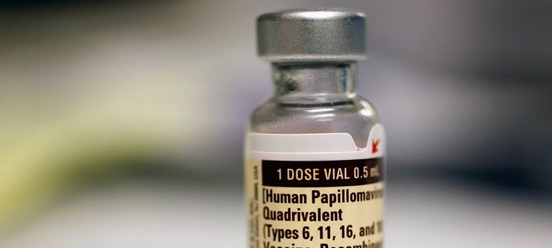
It is worth mentioning that the new cervical cancer vaccines approved for use in pre sexual individuals for the prevention of cervical cancer being developed and marketed by pharma giants Merck and GlaxoSmithKline, will likely have a positive collateral impact in the world of head and neck / oral cancers in the next couple of decades, as these young, vaccinated individuals do not develop HPV related malignancies in sites far removed from the cervix. The foundation is a strong supporter of the use of the vaccines, and encourages their use in young males as well as females. The foundation has written to the FDA expressing this viewpoint.

Read October 2007 press release from the foundation on this position.

The foundation also believes that studies that are currently being conducted will better elucidate this apparent survival advantage for individuals with HPV positive disease, and in the next few years this will be likely better defined. As treatment modalities for both types have remained consistent, we believe that the change in the causative etiology will prove to be an influencing factor in this survival advantage. It is possible that if this is true, treatment modalities for HPV vs. tobacco related tumors could be altered. This is strictly speculation at this point. There are also therapeutic vaccines under study which may be able to suppress viral loads and prevent recurrences in patients with HPV positive tumors. The results from these has yet to be published, and we are far from knowing definitively that this is possible.

If you are a doctor that wishes to have tissue samples tested for HPV, or a patient that wishes to provide information to your doctor on where this can be done with accuracy; OCF recommends that you have the testing done by Johns Hopkins Medical Laboratories. They have a great deal of expertise and experience. The directions on how to contact them or where to send samples to are located at this link http://pathology.jhu.edu/labservices/hpv.cfm

If you would like to see the current guidelines for vaccination of your children with Guardacil see the article from the journal CANCER. Guidelines 2008

Research articles which document the correlation between HPV and oral cancer

CDC - HPV Page

Centers for Disease Control HPV monitoring and efforts (link)

HPV and Tobacco not related as causes  from the Journal of the National Cancer Institute, November 2007

Clinical implications of HPV in head and neck cancers. Info from the Journal of Clinical Oncology, 2006

Risk factors for head and neck cancer with a focus on HPV from the Journal of Dental Research, 2007

(Human papilloma virus (HPV) fact sheet) by Stressgen Corp.

Changing patterns of tonsillar squamous cell carcinoma in the United States National Cancer Institute 1999

Human Papillomavirus-Associated Carcinomas in Hawaii and the Mainland U.S.

Tongue and Tonsil Carcinoma (Increasing Trends in the U.S. Population Ages 20–44 Years) The American Cancer Society 2006

HPV Communication: Review of Existing Research and Recommendations for Patient Education From the Journal Cancer 2004


This page updated on 10/28/09